


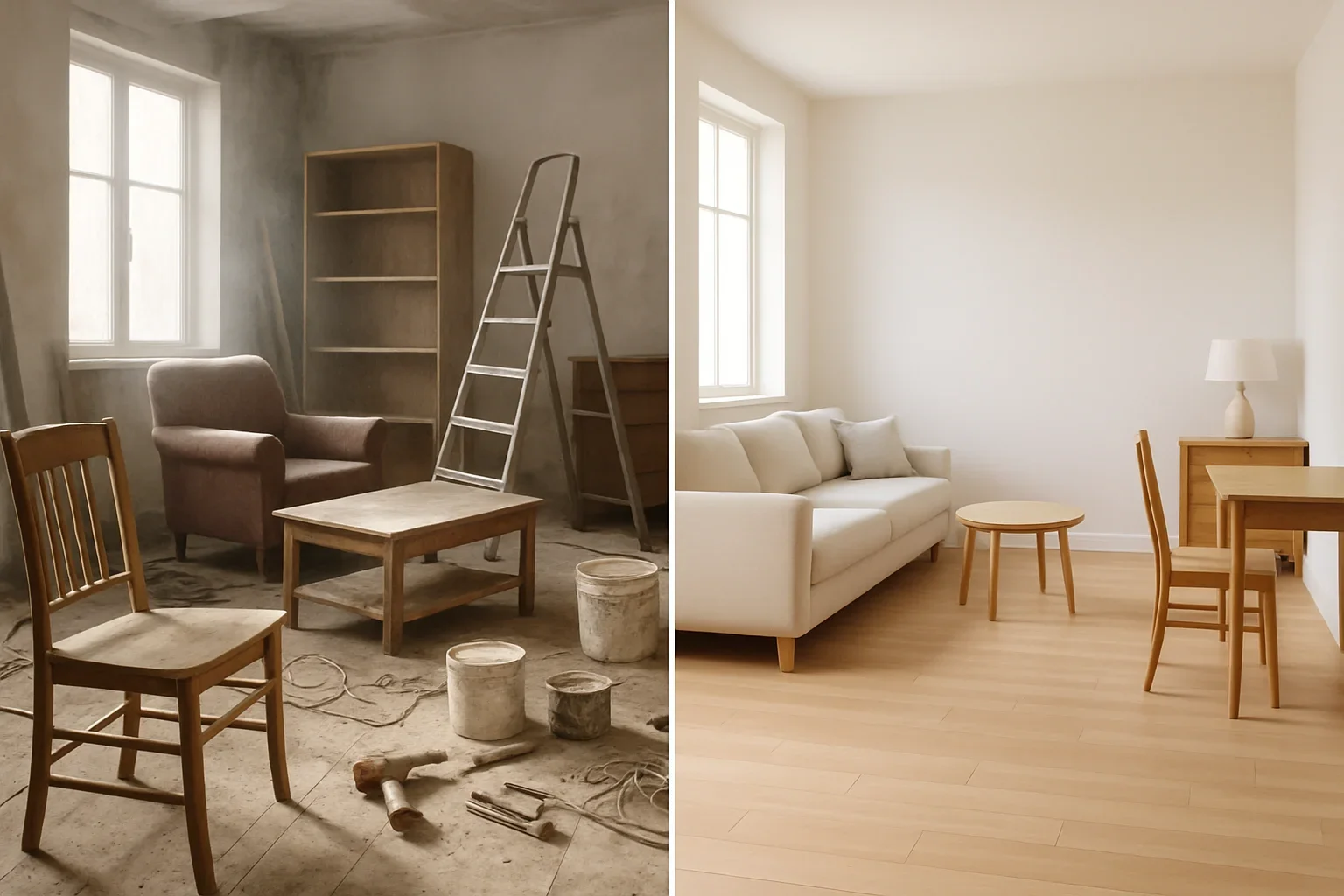
Renovation work is incredibly exciting once the dust settles and the final photos are taken, but the weeks in between can be brutal on your home. Between endless drywall dust, stray tools, and a rotating cast of tradespeople trampling through your hallways, your furniture is at risk of taking a serious beating.
If you’ve got builders or decorators booked, you need to decide early on what’s staying put and what needs to be moved safely out. This is especially true if you’re tackling a major kitchen rebuild, an extension, or a full-scale house refurbishment.
Moving your main furniture off-site isn’t just about protecting the fabric; it’s about giving yourself breathing room. It frees up workspace for the trades, cuts out the risk of accidental dings, and saves you from lifting heavy beds and wardrobes every single time the project enters a new phase.
This is why we see customers taking short-term storage during renovations as a practical decision, where the effort spent moving sofas, tables, beds and fragile pieces off-site can free up working space, reduce the risk of knocks and dust damage, and remove the need to have to keep lifting heavy items every time the project changes phase. Renovations are already stressful upheavals of the normal living household, so anything that can reduce stress, bring fewer delays and a cleaner handover between rooms can bring respite and make the job easier to manage.
If you are weighing up whether storage is worth it, ask yourself: “How much easier and safer would the work be if the room were clear?”
Room-by-room renovation storage checklist
Different rooms create different storage problems. Before work starts, walk through the house room by room and decide what needs to be removed, what can stay covered, and what must remain accessible.
Kitchen renovation
- Store: dining tables, sideboards, display cabinets, occasional chairs, boxed crockery and rarely used appliances.
- Keep accessible: kettle, microwave, basic cookware, pet food, medicines and cleaning supplies.
- Watch out for: dust from plastering, limited access through hallways, and trades needing clear routes for cabinets and worktops.
Living room or reception rooms
- Store: sofas, armchairs, rugs, curtains, artwork, mirrors and lamps.
- Keep accessible: one usable seat if the room will remain partly in use.
- Watch out for: fabric absorbing dust and large items being moved repeatedly as work progresses.
What not to send into renovation storage
Durable furniture in a room that is not being worked on can often remain if it is fully covered and the space is sealed as well as possible with dust sheets or a temporary barrier. The key is to keep access routes clear for tradespeople and avoid leaving anything valuable, delicate or difficult to clean in the main work area.
Even when most of a room is being cleared, some items are better kept with you. These usually include passports, house documents, medication, jewellery, chargers, school items, work laptops, keys, renovation plans, paint references and anything you may need at short notice.
If trades may need to match finishes or check measurements, keep samples, drawings and product details in the house rather than packing them away with general contents.
Plan the storage around the work
Note how long the renovation will last, whether you will need anything back mid-project, and which items need extra care.
A clear inventory helps keep track of what has gone out and what stays behind. If you want a practical benchmark for deciding what to store, Wilkins can advise on collection, packing and redelivery as part of a combined removals and storage service.

How to prepare furniture before it goes into storage
Before collection day, think about how the removals team will get furniture out safely. Renovation projects often leave hallways, driveways and entrances busier than usual, especially if skips, scaffolding, materials or trade vehicles are already on site.
- Keep stairs and hallways clear before the team arrives.
- Check whether builders, decorators or delivery vehicles will be on site at the same time.
- Let Wilkins know if scaffolding, temporary flooring or restricted parking could affect access.
- Decide whether furniture should return in stages as rooms are completed.
Protecting Furniture details that are easily damaged
Use furniture blankets, bubble wrap or other protective materials on corners, edges and legs, and cover soft furnishings with breathable materials rather than anything that traps moisture.
Wilkins are happy to pack and prepare bulky items (we can remove beds, tables, most flat-pack that is designed to be dismantled and put up again) with our Professional Packing service if you want a more hands-off approach.
Why combined removals and storage is often easier than managing it yourself

Once a renovation is underway, day-today living around the site and phased work coordination can cause strain. Using one team for collection, storage and return delivery keeps the job simpler, handling each of the packing, transport, storage and redelivery requirements, so you are not trying to brief separate contractors or move the same furniture twice.
For homes under pressure, be it family living around trades, clearing rooms before decorators arrive, or managing a large home renovation, with Wilkins Removals you get much needed relief by working with a long-established, family-run company based in Reading, with over 140 years of experience. Our highly trained removals team, modern fleet of vehicles and a Reading warehouse for Removals and Storage, and Professional Packing all able to be arranged as part of the same plan.
We are focused on providing a 5 star, complete service, with less disruption, fewer opportunities for damage, and a clearer path through the renovation. If you want to keep the project moving without managing every handover yourself, request a removals and storage quote or book a survey with Wilkins.
When renovation storage is the right choice for your project
Renovation storage often becomes a sensible option the moment a project starts affecting how you use the rest of the house. If you are replacing a kitchen, sanding floors, decorating several rooms, building an extension or managing a whole-house refurbishment, storing furniture away from the work area can make the project safer, cleaner and easier to manage.
It can also take pressure off practical deadlines. If trades need clear access, if rooms have to be painted in sequence, or if furniture would need moving repeatedly from one space to another, temporary storage during renovation gives you breathing room. It is also helpful if the work overruns, because your belongings remain protected rather than being pushed back into unfinished rooms too soon.

A practical process for arranging storage during renovation
Once you know which rooms need clearing, and you’ve created your inventory of items needed to go into storage, the next step is simple: ask Wilkins for a survey or quote and talk through exactly what needs to be stored. That early conversation helps shape the right plan for your project without overcomplicating the job or leaving you to guess what should happen next.
Collection, storage and redelivery made simple
On the arranged day, Wilkins’ trained removals team collect the items, handle and pack them carefully, and take them to our secure Reading warehouse for storage.
From there the focus shifts to timing once your renovation is nearing completion, where Wilkins can plan redelivery so furniture returns in the right order, ready for the rooms that are finished first. We aim to keep the process calm and avoid the stop-start disruption of moving the same pieces more than once.
What Wilkins will need to know before quoting for renovation storage
To plan storage properly, it helps to have a few details ready before you request a quote:
- Which rooms are being renovated, decorated or extended.
- Whether access routes will change during the works.
- Which items need packing, dismantling or specialist handling.
- Whether anything may need returning before the rest of the furniture.
- Your expected start date and likely completion window.
- Whether the renovation may overrun and require flexible storage dates.
This helps the team plan collection, storage space and redelivery around the actual project, rather than treating it like a standard house move.
How to keep the rest of the house workable while storage is in place
Once the bulky pieces are out, keeping part of the house calm enough to function as normal is the main aim. Choose rooms that can be closed off from dust, often a bedroom or sitting room, and set them as your protected base for sleeping, working or simply getting a break from the renovation noise.
Keep trades routes clear through hallways, stairs and doorways, with any remaining furniture pushed back and covered so nobody has to weave around obstacles.
Keep daily essentials separate
Set aside a small, clearly labelled supply of toiletries, kitchen basics, chargers, medicines and a few changes of clothing so you are not searching through boxes every morning. A simple inventory also helps if you are using Domestic Storage for part of the house contents: mark boxes by room, note anything fragile or specialist, and keep one list for what has gone into storage and what must stay accessible. That makes redelivery far easier later, especially if items need to return in stages as the work finishes.

Ready to arrange storage for your renovation?
Once the rooms are mapped out and the dust sheets are ready, the simplest next step is to get one experienced team to manage the rest. With Wilkins, you get careful packing, collection from your home, secure storage, and redelivery when the work reaches the right stage.
Our joined-up approach is what makes storage during renovation manageable. If you are storing everyday furniture, family pieces, or more delicate items, Wilkins’ long-standing team can handle the process with the care you would expect from a family-run company with over 140 years of experience.
To take the next step, contact us to book a survey or request a removals and storage quote.